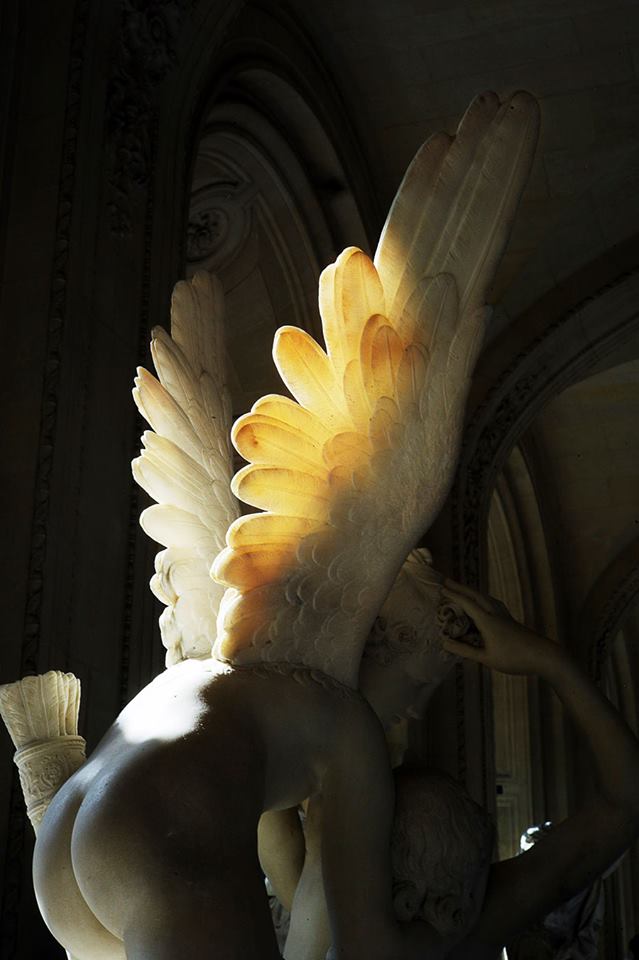
Despite any (contemporary) collective cognitive decay or splendor, I have decided to preserve a pristine wildness regarding the Songs I could have done without, but cannot do without any longer ___________________________________
Play it again, (by) Heart.
Camille Saint-Saëns – Le Cygne (The Swan) (performed by the Johann Strauss Orchestra – conducted by André Rieu)
It is the 13th (penultimate) movement of The Carnival of the Animals, a glorious, dark, humorous musical suite.
The Swan revealed (to me) other (inner) characters that the unawareness of juvenile, frolicsome moments seemed to hide, but, by all means, claimed whenever the case. It still reminds me of sorrow; it still reminds me of youth – both of them, well preserved.
Diamanda Galás – I Put a Spell on You
There is an intriguing union, somewhat disturbing, between avant-garde, experimental, jazz and electronic styles that Diamanda outrageously imbibes into her work, yet with the subtlety of an obscure fairy.
I do not remember when (or how) I discovered the cover she made to Screamin’ Jay Hawkins’ original song, but I haven’t forgotten it ever since. It must be a spell.
Dmitri Shostakovich – The Second Waltz (performed by the Johann Strauss Orchestra – conducted by André Rieu)
I would relate it to any of the ordinary evenings that require us to dance… I would relate it to an impetuous humor and self-contained gloominess.
We are extraordinary dancers – and none of the evenings belong to the commonplace.
Sainkho Namtchylak – Lonely Soul
I consider her the Lady of the Tuvan witchcraft (overtone throat singing technique). The dharma practiced throughout the whole album (Stepmother City), as well as the avant-garde improvisation that have made it somewhat inaccessible to the wider public, the prevailing spiritual repertoire, all channel the artist’s work into sacred recordings.
“Lonely soul” is a musical prayer for the sacred in each of us: for it to be found, for it to convey.
Angelo Badalamenti – The Nightingale (vocal by Julee Cruise)
This composition reminds me of necessary deaths, certain remarks that might as well turn us into savages. It recalls David Lynch’s neo-noir visions, (even) the enchanting, unsettling Blue Velvet theme as interpreted by Isabella Rossellini.
Ryuichi Sakamoto – Merry Christmas Mr. Lawrence
The novelty brought by the fusion combining Asian and Western classical music with other avant-garde, electronic styles helped Ryuichi Sakamoto win the 1983 BAFTA Award for Best Film Music for the “Merry Christmas, Mr. Lawrence” soundtrack. Furthermore, the movie marked several impressive collaborations between Sakamoto, the director Nagisa Oshima, David Bowie (part of the cast, along with Sakamoto) and David Sylvian (who wrote and sang the lyrics of “Forbidden Colours”).
The song is an eclectic approach to every Christmas. And there is spring and we become merry – all over again.
Alva Noto and Ryuichi Sakamoto – By This River
Vaporous, delicate sounds that resemble electronic humming birds create a mesmerizing masterwork. The glitch styles that assimilate the skilled piano contributions of Ryuichi Sakamoto delve into the open space of a heart.
It might be a river that sounds like a heart. It might be a heart that flows like a river. It is definitely enthralling.
George Gershwin – How Long Has This Been Going On (performed by the Ben Webster Quartet – Ben Webster (tenor saxophone); Kenny Drew (piano); Niels-Henning Ørsted Pedersen (bass); Alex Riel (drums))
“The brute” made the sax weep on this piece, in utterances of joy and despair, of consolation and disputes that require no resolution (and, as far as I am concerned, no lyrics whatsoever).
To me, it is a bedtime story, a reverie that collects the gentleness of lullabies and the holy terror of mourning.
Bauhaus – The Passion of Lovers
This influenced the transformation that occurred early during my childhood (along with most of the musical works that were to influence a certain kind of disproportioned behavioral evolution and that have become meaningful during those years). It marked my falling in love with my relatives – and their acquaintances.
It (later) meant not allowing the safety procedures to disturb any of the games that were to wonderfully unfold the humor of beings/ situations.
Henri François Joseph Vieuxtemps – 6 Morceaux de salon, Op. 22, No. 3 Reverie (performed by Lola Bobescu (violin))
This is the music of solitary thoughts, when all the people become landscapes, when the world can be gathered and appreciated and guilt does not exist.
Lola Violeta Ana-Maria Bobescu, the Romanian violinist born in Craiova (internationally considered one of the best female performers) displayed great virtuosity in rendering the composition: her violin conveys ardor, perspicuity, an unearthly delicacy and a sense of relief.
“Reverie” means to be at ease with oneself.
Brian Mark – A Eulogy to Words (performed by London’s Royal Academy of Music – conducted by Michael Alexander Young)
A Eulogy to Words may be equally considered the eulogy to music, for each word is music (and both of them belong to each other).
With an instrumentation consisting of chamber orchestra (featuring horn, harp, piano), tape and pre-recorded electronics, “A Eulogy to Words” is a multi-media composition with a duration of 10 minutes, displaying the audio document delivered on 29th April 1937 by Virginia Woolf (as part of the BBC Broadcast series “Words Fail Me”), as a treatise on the art of writing and language (a recorded narration that was published in 1942 in “The Death of the Moth and Other Essays” and titled “Craftsmanship”).
This meditation continues to be the only existing (fascinating) recording of Virginia Woolf’s voice.
“A Eulogy to Words” is therefore a spellbinding praise to the music of words, their permanence (when properly chosen and joined into meanings) and “their most striking peculiarity – their need of change” (Virginia Woolf).
Nirvana – Something in the Way
Once again, something in the way: childhood. It takes back, brings back, urges and points back to any of the current characters I may encounter on the inside – evanescent, yet unintentionally dominant.
Kurt Cobain is (always) in (the way).
©2014 Emmah Toris
– Image courtesy of Michael Pederson –